Blog / Cleveland Alfa Romeo Service

Blog

All Cleveland Alfa Romeo Service Alfa Romeo of Strongsville Cleveland Alfa Romeo Dealer Alfa Romeo of Strongsville Service Alfa Romeo Fiat of Strongsville 2025 Alfa Romeo Giulia 2025 Alfa Romeo Lineup 2025 Alfa Romeo Stelvio 2025 Alfa Romeo Tonale 2024 Alfa Romeo Stelvio 2024 Alfa Romeo Tonale Alfa Romeo SUV 2024 Alfa Romeo Giulia Quadrifoglio 2026 Alfa Romeo Giulia Fiat Dealership Strongsville Giulia inventory 2024 Alfa Romeo Giulia Alfa Romeo Quadrifoglio Alfa Romeo Safety Features Alfa Romeo Stelvio Alfa Romeo Tonale Battery Service Brake Repair Strongsville, OH Brake Service Leasing Alfa Romeo Luxury Sedans for Sale Strongsville, OH Oil Change Transmission Service
Oil change - Alfa Romeo Oil Change service

Your Alfa Romeo Giulia Needs Good Oil. It Isn't Negotiable.

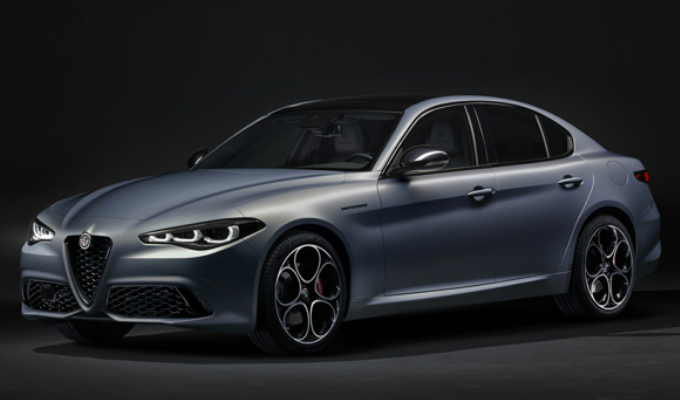
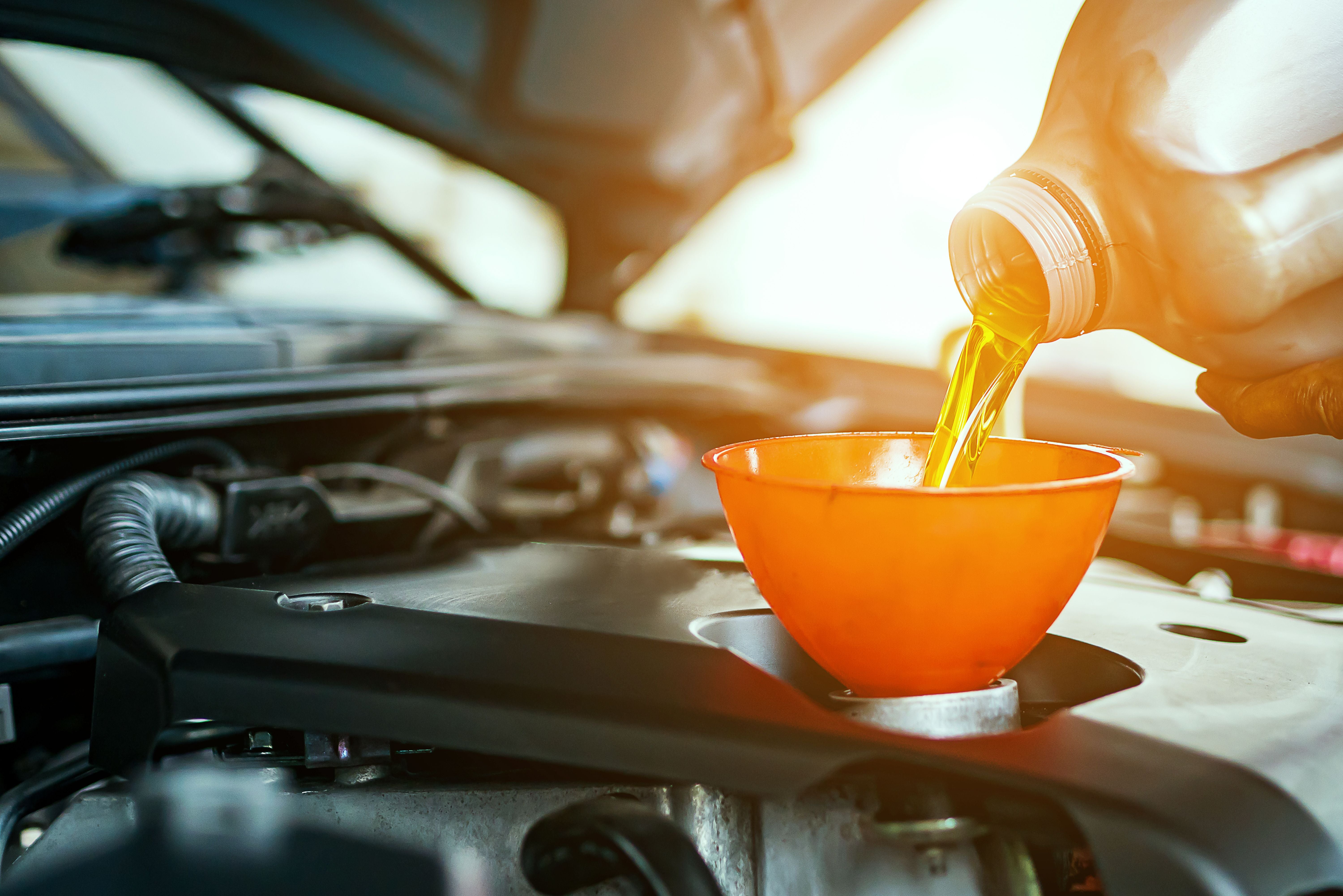
The 2026 Alfa Romeo Giulia has a 2.0L Turbocharged 4-cylinder producing 280 hp. It's responsive, eager, and considerably more interesting than the average four-door sedan. It also has a collection of fast-moving metal parts that would much rather not meet without a healthy film of oil in between. That's why an Alfa Romeo oil change isn't maintenance to put off until the calendar looks less busy. For Giulia owners around Strongsville, OH, it's one of the simplest ways to keep the car behaving like an Alfa should. Oil Has More Than One Job Engine oil lubricates moving components, but that's only the beginning. It also helps manage heat, reduce friction, suspend contaminants, and protect internal surfaces as the engine operates. That's particularly important in the Giulia's Turbocharged engine. A Turbocharger operates at extremely high speeds and temperatures and depends on a steady supply of clean oil for lubrication and cooling. Fresh oil handles those conditions rather well. Oil that has spent thousands of miles being heated, cooled, contaminated, and heated again becomes progressively worse at the job. Eventually, chemistry wins. Skipping an Oil Change Gets Expensive Putting off an Alfa Romeo oil change doesn't mean the engine will fall apart immediately. That's precisely why it's easy to keep putting it off. Oil gradually degrades. Contaminants accumulate, lubrication becomes less effective, and deposits can begin forming inside the engine. Continue long enough and sludge, increased friction, higher operating temperatures, and accelerated component wear can follow. Turbocharged engines give you another reason to avoid the experiment. The Turbocharger's speed and heat place substantial demands on its oil supply, so poor lubrication isn't something you want to introduce into the equation. The Giulia was designed to respond quickly when you press the accelerator. Giving its engine increasingly tired oil is a strange way to thank it. So, How Often Does a Giulia Need Fresh Oil? Alfa Romeo calls for synthetic engine oil and filter replacement no later than every 10,000 miles or 12 months, whichever comes first. That's the outer limit, not an instruction to ignore the car until mile 9,999. Depending on operating conditions, the Giulia's oil-life monitoring system may indicate that service is necessary considerably earlier. Under demanding use, that reminder can arrive as early as 3,500 miles. Driving habits, operating conditions, and mileage all play a part, so the owner's manual and the vehicle's monitoring system should take precedence over a generic interval pulled from the internet. Synthetic Oil Isn't an Upgrade Here Another common oil-change question is whether synthetic oil is worth paying for. With the Giulia, that decision has already been made for you. Full synthetic oil is factory-specified for the 2.0L Turbocharged engine. Its resistance to thermal breakdown and ability to maintain appropriate flow across a wide range of temperatures make it particularly suited to an engine dealing with Turbocharger heat. The important part is using oil that meets Alfa Romeo's specified requirements rather than grabbing a bottle based solely on the viscosity printed in large numbers on the front. European performance engines can be particular about such things. In fairness, so can Italians about coffee. The Giulia Will Usually Tell You When Something's Up The 2026 Giulia's 12.3-inch digital instrument cluster can display vehicle information and service alerts, so don't make a habit of dismissing warnings without checking what caused them. An oil or service reminder is the obvious signal. Changes in engine sound, unusual odors, or other changes in how the engine behaves deserve attention as well. Oil color alone isn't a reliable diagnosis of oil condition, since engine oil naturally darkens as it does its job. If you're uncertain about its condition or the last service date, having it inspected makes considerably more sense than trying to judge engine health from the dipstick. A Giulia Deserves Someone Who Knows a Giulia An oil change sounds simple because, mechanically, it is. Doing it correctly still requires the proper oil specification, filter, fill quantity, procedures, and inspection. Factory-trained Alfa Romeo technicians work specifically with the manufacturer's vehicles and maintenance requirements. That becomes more valuable with a performance-oriented European sedan where using the correct fluids and procedures isn't something worth approximating. Regular service visits also allow technicians to spot leaks, abnormal wear, fluid concerns, or other developing problems while the car is already in the shop. Keep the 280 hp Happy Routine oil service isn't exciting. That's rather the point. The exciting bit is driving the Giulia. The oil change helps make sure you can continue doing that without turning a relatively inexpensive maintenance item into a considerably more expensive mechanical problem. If your 2026 Giulia is approaching its service interval, visit Alfa Romeo of Strongsville for factory-trained maintenance. Schedule your service appointment online and give that 280 hp Turbocharged engine the clean synthetic oil it was designed to use.
Warning,Lights,Flash,On,Car,Dashboard.,Low,Tire,Pressure,Error | Strongsville, OH

From Dashboard Lights to Odd Noises: Four Signs Your Alfa Romeo Needs Attention

Schedule Service for Your Alfa Romeo Your car is engineered for precision performance, and your local Alfa Romeo dealership can help it stay that way. Spot These Four Signs: When It's Time for Alfa Romeo Maintenance 1: Dashboard Warning Lights One of the earliest signs that your car might have a problem is the dashboard lights illuminating. Some warning lights provide specific information, such as the oil pressure light, while others like the check engine light provide a more general alert. Some warning lights only signify a minor problem, but others point to an urgent concern. You should therefore never ignore any kind of warning light in your Alfa Romeo. A technician at the local dealership can carry out diagnostic checks to get to the root of the problem. 2: Handling Issues You are probably accustomed to your Alfa Romeo handling beautifully, so if there's any hint of a problem, it will be immediately apparent. This could include pulling to one side or difficulty steering in a straight line. This could be due to problems with the suspension, brakes, or tires, all of which are vital to your car's safety. 3: Leaking Fluids It's good practice to routinely look under your car for any sign of a puddle or leak. A few occasional drips are normal, especially when you've been using the air conditioning, but anything more significant warrants attention. Leaks can come from coolant, brake fluid, transmission fluid, or oil, to name just a few potential causes. Describing the color of the leaking fluid to the Alfa Romeo technician can help them pinpoint the cause more quickly. 4: Reduced Fuel Efficiency If you notice you're filling up at the gas station more often than usual, but you haven't increased your mileage, there may be a problem with your car. When your car's engine is struggling, it has to work harder, which in turn increases the amount of fuel used. Potential causes could include dirty spark plugs, malfunctioning sensors, or degraded filters. Schedule a Service at Your Local Alfa Romeo Dealership Whether you have noticed any of the above warning signs or you're simply overdue a service, your local dealership can help. With certified technicians and cutting-edge diagnostics, your car will be in the best possible hands. With manufacturer tools and state-of-the-art technology, we can guarantee your Alfa Romeo will receive the expert care it deserves. To schedule a service or get professional advice, contact us today at Alfa Romeo of Strongsville in Strongsville, OH.

Car Battery | Strongsville, OH

Four Signs Your Alfa Romeo's Battery Needs Replacement

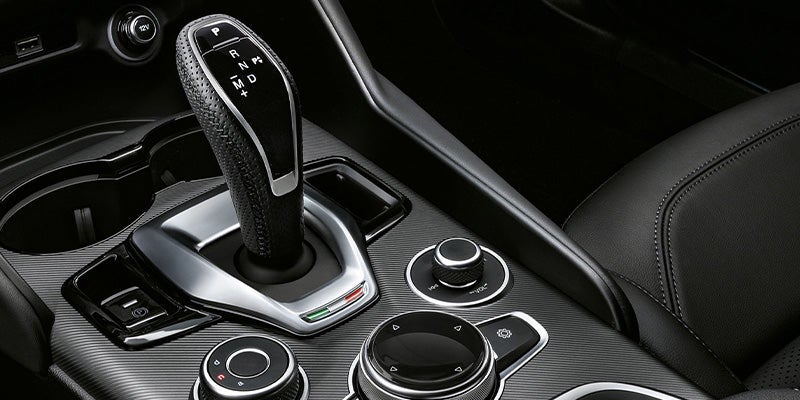
Schedule Service Without a healthy battery, your Alfa Romeo will struggle to perform efficiently and eventually won't be able to run at all. It's therefore important to be aware of the signs that could indicate your battery is coming to the end of its lifespan. Your local Alfa Romeo dealership can provide advice as well as offer a battery replacement service when needed. 4 Warning Signs Your Alfa Romeo Battery May Be Failing 1: Electrical Glitches Everyone expects a failing battery to cause difficulties with the engine starting, but this isn't always the first sign. If you notice your electrical system developing glitches, it can indicate your battery is beginning to fail. This could be non-functioning windows or flickering headlamps, but could also include malfunctions such as alarms triggering randomly or windows suddenly opening. 2: Unpleasant Odors If you notice unpleasant odors in your cabin, a failing battery may be the cause. Leaking battery fluid can produce a rotten egg smell, caused by the chemical reactions creating hydrogen sulfide gas. Leaking fluids can also cause corrosion and may damage surrounding cables or engine components, leading to a burning smell. Any kind of unusual smells in your car should always be promptly investigated. 3: Failing Auto Stop-Start Feature The automatic stop-start feature on Alfa Romeo cars provides excellent fuel efficiency, as well as reducing carbon emissions while your engine is idling. However, this relies on your battery being able to deliver sufficient power on demand. While you're in the car, there may be multiple other functions drawing on the battery, such as the radio and climate control. This can mean there's not enough left for your car to complete the auto stop-start function. 4: Gears Won't Shift Modern Alfa Romeo models such as the Stelvio and Giulia have a system that's completely electronic, including the gear shifter. This means that in order to shift gears, an electronic signal needs to be sent to the transmission rather than relying on a mechanical shift. If the battery is starting to fail, the gears may be stuck in Park and refuse to move. It's natural to assume that any gear difficulties point to a fault with the transmission, but it may simply mean that it's time to replace your battery. Your dealership can run diagnostics to check the cause. Schedule a Service at Your Local Alfa Romeo Dealership It's a good idea to have your Alfa Romeo serviced regularly at your local dealership. They can check your battery health as well as carrying out a range of other diagnostics and performing repairs. If you think you have a problem with your battery or you want to schedule a service, we can help. Contact us here at Alfa Romeo of Strongsville in Strongsville, OH for professional advice you can trust.

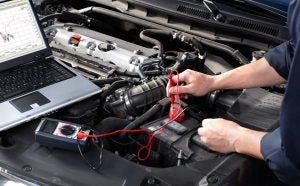
Smart,Car,Service,Diagnostics,Software,Concept.mechanic,Using,Digital,Tablet,Inspecting | Strongsville, OH

5 Signs Your Alfa Romeo Needs a Transmission Service

A transmission that's in disrepair can seriously impact a car's performance. Most of the problems occur with the vehicle's gears, and they can prevent you from driving, make driving more dangerous, or make gear changes very uncomfortable. If you start having gear problems or hearing new noises coming from your car, then it's time to visit the Alfa Romeo dealership for a transmission service. 5 Signs Your Alfa Romeo Needs a Transmission Service From Your Alfa Romeo Dealership 1. Gear Changes Cause a Racket You very rarely or never hear noises caused by gear changes in a car without transmission or other gear-related problems. If you start hearing whining, buzzing, grinding, or another kind of noise when you change gears, then it can indicate a problem with your transmission. Cars sometimes also begin making noises while they're in neutral if the transmission is in disrepair. You could also start hearing noises when the car is in neutral, but your gear changes may remain silent. 2. Gear Changes Are Uncomfortable Shifting gears should always go smoothly, with no jarring sensations from your car during or after the change. If your car jolts, shakes, or shoots forward as if you've activated some secret super-speed setting, then you could have a problem with your transmission. 3. Gear Changes Are Difficult or Impossible It will often become harder to change gears when there's something wrong with your transmission. It might feel like the gear shifter just doesn't want to move. Sometimes you'll eventually be able to shift gears, but sometimes you may not be able to shift gears at all when there's a problem with the transmission. 4. Gear Changes Don't Fully Happen If your car fails to fully engage the next gear during gear changes, then your car becomes a lot harder to control. You may not be able to accelerate or decelerate normally, and it may feel like the vehicle doesn't have any traction on the road when this problem occurs. The transmission itself has lost traction between gears. This is known as your car slipping gears, and it usually points to a problem with the transmission. 5. Gear Changes Are Delayed When your transmission is faulty, it can take a little longer to respond when you ask it to change gears. This happens most often when shifting from park to drive and vice versa, but the problem could occur during any gear change. Take a trip to Alfa Romeo of Strongsville in Strongsville, OH, if you're having problems with your transmission.

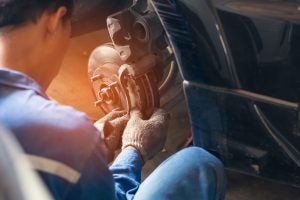
Mechanic Working on Brake Repair | Strongsville, OH

6 Signs Your Alfa Romeo Needs a Brake Repair

Even the most reliable of brakes need careful maintenance and occasional repairs or replacements. As you drive, watch out for the following signs of brake wear or malfunctions. Always head to your local Alfa Romeo dealership for brake repair as soon as you need it. How to Recognize When Your Alfa Romeo's Brakes Need Attention Strange Sounds While Braking A common early warning sign of brake trouble is unusual noises. A little temporary squealing might be caused by moisture on the brake pads or something worse like corrosion. If a squealing sound persists, you may need to replace a worn-out pad; brake pads are designed to make this noise when almost finished. Vibrating Brake Pedal If your brake pedal vibrates, a rotor disc may have become damaged by a faulty brake pad or warped from age and overheating. You can sometimes resurface a damaged rotor to resuscitate it for a while, but more frequently, you'll need a new rotor. Weakened Stopping Power Never continue to drive if your brakes lose any of their stopping power. Sometimes overheating brakes suffer brake fade: a temporary reduction in friction that robs the car of brake force. If your brakes don't recover full strength after a pause, have them inspected by a trusted mechanic. Veering to One Side Some brake issues can cause a car to pull slightly to one side or the other. The veering happens because faults rarely occur on both sides of the car at once. Squishy Brake Pedal A normally firm brake pedal could become squishy if the brake fluid leaks. Leaking brake fluid means at least one of the brake lines no longer contains full hydraulic pressure. If you check under your car, you might find a leaking yellow or amber liquid. Never continue to drive with a brake fluid leak. Brake Warning Light on the Dashboard The cutting-edge computer sensors inside your Alfa Romeo will almost always detect a brake problem before you notice it. You'll then see the brake warning light come to life on your instrument panel. Keep Your Brakes Maintained at Your Alfa Romeo Dealership When it comes to your brakes, preventative maintenance is vital for safe driving, especially in a car as powerful as an Alfa Romeo. Allow our specialist technicians to inspect and service your brakes twice a year. Visit Alfa Romeo of Strongsville in Strongsville, OH, today to have your brakes checked and repaired.

05 (2)

The Art of Alfa Romeo Maintenance: Tips for Keeping Your Vehicle in Peak Condition

Any work of art requires diligent care, and Alfa Romeo cars are as close to pure artwork as any automobile can ever be. If you wish to maintain the world-class performance and stunning aesthetics of your luxury Italian ride, follow the Alfa Romeo maintenance tips laid out below. The Art of Alfa Romeo Maintenance: Tips for Keeping Your Vehicle in Peak Condition Refresh Your Motor Oil The engine of your car is a finely tuned masterwork of engineering that needs to be properly oiled at all times. Motor oil lubricates, cleans, and cools the entire system. If you neglect to change your oil on time, friction and corrosion may rise, rapidly causing damage. Most drivers are advised to change their oil twice a year; it's best to consult your owner's manual and a trusted technician to figure out your model's optimal oil change interval. Flush the Coolant and All Fluids The impressive power that your car's engine generates would start to overheat if it wasn't for the cooling system. It's essential to keep the coolant properly maintained with regular checks and a complete flush every two or three years. The brake fluid, transmission fluid, differential fluid, and windshield wiper fluid should be maintained with equal care. Have the Brakes Examined The brakes in any Alfa Romeo vehicle are exceptionally durable. The innovative MKC1 brakes in Giulia and Stelvio models in particular are in a class of their own. However, all brakes undergo significant wear and tear over time. Your car's brake pads, shoes, rotors, and drums will eventually need to be replaced. Whatever your model and brake system, have it inspected twice a year by a professional. Replace Air and Fuel Filters Air filters in both the engine and cabin tend to last six to twelve months before starting to clog up. It's important to replace each type of air filter before your engine and breathing air start to deteriorate. Fuel filters typically last far longer; check your owner's manual for guidance on replacement intervals. Replace the Timing and Serpentine Belts Two hardy belts are key to your car's performance: the timing belt and the serpentine belt. These belts can be expected to last over 60,000 miles and up to 100,000 miles and 150,000 miles for the serpentine and timing belt, respectively. After 60,000 miles, check each belt frequently and replace them at the first sign of fraying or slipping. Leave Maintenance to the Experts at Your Alfa Romeo Dealer Alfa Romeos require specialist care and all maintenance work is best left to the pros. Our courteous, highly experienced technicians can arrange a suitable schedule; they can then remind you whenever an important vehicle service is due. Visit Alfa Romeo of Strongsville in Strongsville, OH, today to have your car promptly serviced.

download - 2024-09-05T135147.047

Preparing Your Alfa Romeo for the Seasons: A Comprehensive Guide

​​​​​​​​​​​​​​​​​​​​​​​​​​​​​​​​Your Alfa Romeo is a stylish, high-performance vehicle that requires regular maintenance to enable it to work at its best. Alfa Romeo maintenance is performed by expert technicians using only Alfa Romeo-approved replacement parts to supply the level of excellence you expect and deserve. As your Alfa Romeo dealer, we want to tell you some examples of the types of maintenance we provide. Examples of Alfa Romeo Maintenance Available at Your Alfa Romeo Dealer Alternator Replacement The alternator is a mini-generator that produces electricity for all your vehicle's systems. It's a very hardy component and will usually only need replacement after approximately eight years. As an alternator gets older, it spins more slowly due to worn parts, and this reduces the amount of electricity it can supply. If your alternator is wearing out, you'll experience issues like seemingly random electrical faults, a weak battery, and strange noises and smells from the engine compartment. Our technicians will examine your alternator and repair or replace it, depending on the situation. Engine Diagnostic An engine diagnostic is a quick and efficient way to diagnose issues in your engine. Your Alfa Romeo contains numerous sensors, each connected to an important component. The sensors monitor their connected component and can identify minute changes in a component's behavior. If a problem is detected, the relevant sensor informs your computer. The computer will assign an error code to the problem and illuminate the check engine light. We'll connect a diagnostic scanner to your computer to identify the problem. The scanner can read the error codes logged by your computer, and these codes point to the system in trouble. The scanner saves a lot of time that would otherwise be spent searching for the problem. This makes the repair process faster and translates into reduced repair bills. Radiator Hose Replacement The radiator is a heat exchange device that's essential for controlling your engine temperature. Your engine works most efficiently at high temperatures, but your engine must be protected against overheating. Liquid coolant absorbs engine heat and transports it to the radiator, where the heat is removed by airflow over the radiator tubes. Two strong rubber hoses connected your radiator to the cooling system. They are specially reinforced and designed to transport liquid that can easily reach over 350 F for sustained periods. As time passes, the rubber can crack or leak, and the resulting coolant loss will cause your engine to overheat. We can replace the hoses in minutes to fix this problem. Contact our service department today at Alfa Romeo of Strongsville in Strongsville, OH.

Contact Us

Fill out this form below and we'll contact you shortly
*Required Fields